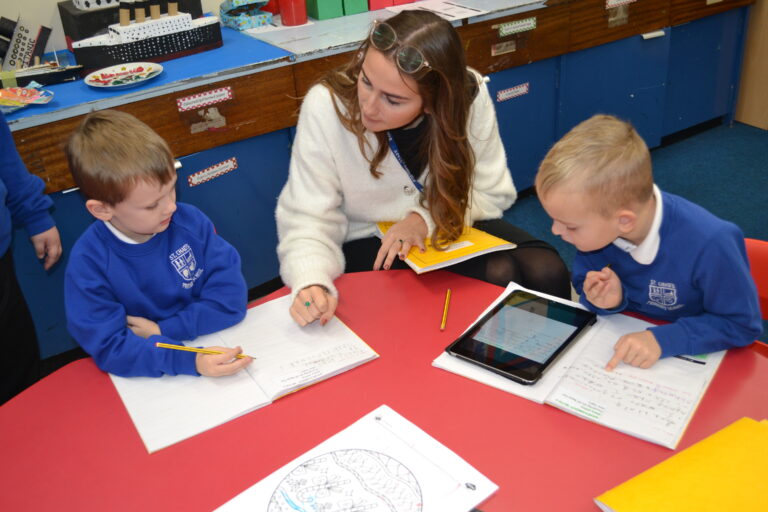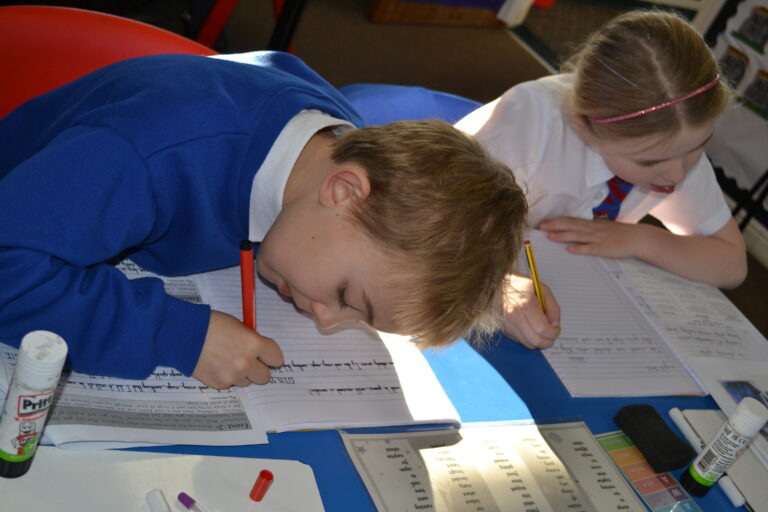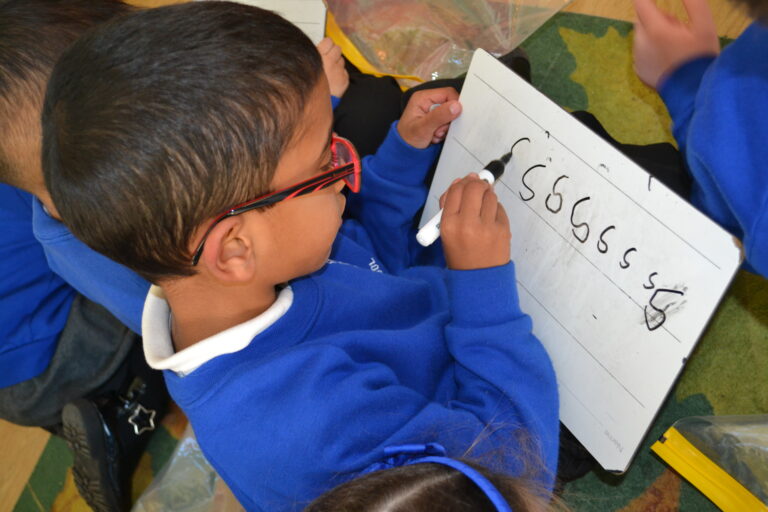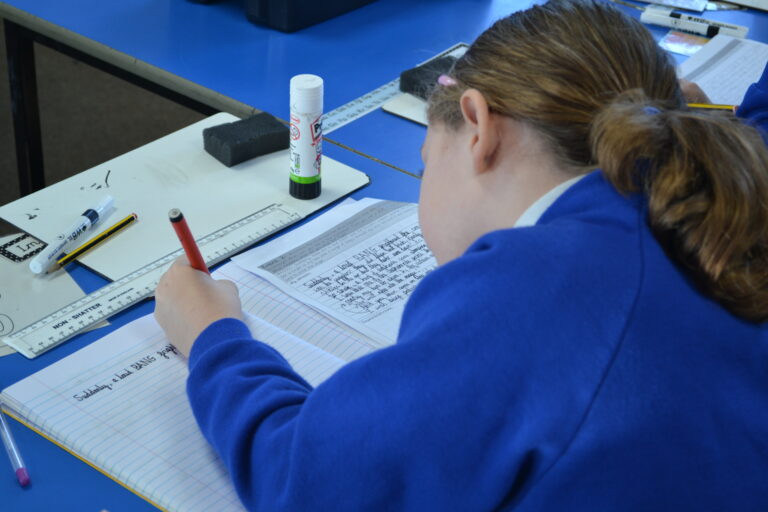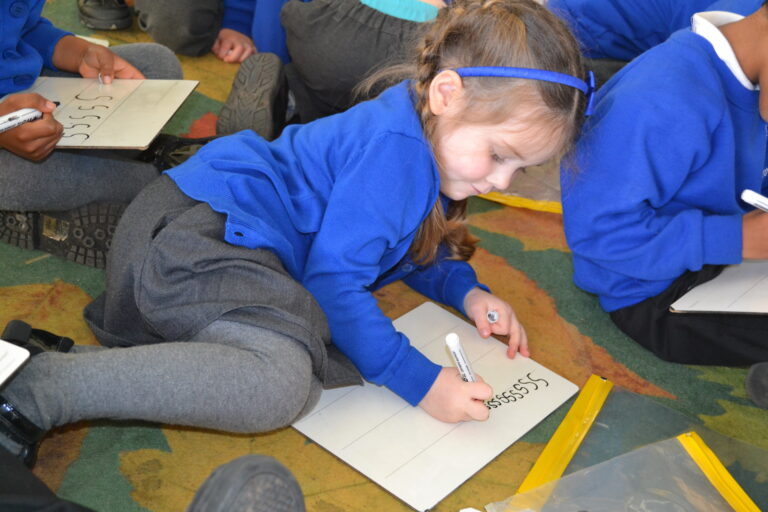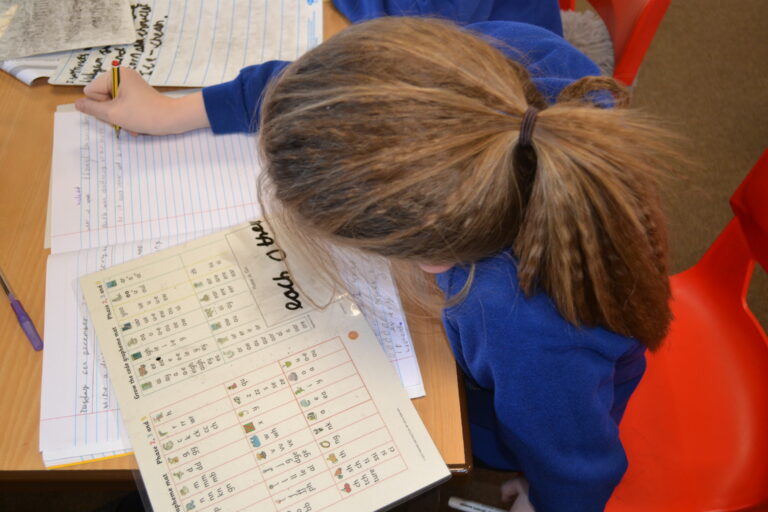
At St Chad’s C.E. Primary School, we know that handwriting is much more than putting pencil to paper. Handwriting activates children’s visual and working memory and has strong links to children becoming good readers. We want all of our children to be able to form their letters correctly and to have legible writing, as this is an important skill for the future.
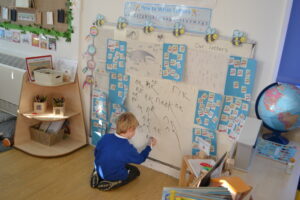
Handwriting begins in the Early Years where children develop their motor skills through carefully planned pre-writing activities, such as mark making in foam, using playdough, chalking on boards, building with large materials, finger painting, using tweezers, and much more. When children in the Early Years are ready (usually at the beginning of reception), they are taught to print letters. To teach children this formation we rigorously follow the ‘Little Wandle’ phonics and handwriting scheme.
During their time in Year 1, the children continue to practice printing following the Little Wandle Handwriting scheme and when they are ready, are introduced to pre-cursive lettering. From Year 2 upwards, joint handwriting has been carefully mapped out with consideration of the letters/sounds, suffixes, prefixes and common exception words for their age group. Some individuals benefit from continuing to print. By the time children get to upper KS2 they can apply their joint handwriting through dictation. Handwriting is taught on a rolling programme for Year 3/4 and Year 5/6 following our bespoke progression document. is taught during an extended lesson every Friday and then through short bursts during the week. During Autumn term, we have a focus on handwriting and presentation to ensure high standards are set from the beginning of the year. Handwriting is taught in a separate book, but it is expected to be evident throughout all books, not just in English. Staff model the expectation of handwriting at all times, whether this is in class modelling, marking in books or writing for displays.
Our pupils are aware that they should take pride in their presentation and all children follow our ‘Ready to Write’ routine which reminds them of how their bodies should be positioned before beginning any writing tasks. All classrooms have a ‘Ready to Write’ poster which children can refer to. Once children in KS2 are forming and joining letters perfectly, they can start to use a pen and by the time our children reach Year 6, they all have the opportunity to use a pen to prepare them for the transition to secondary school.
Handwriting is taught during an extended lesson every Friday. During Autumn term, we have a focus on handwriting and presentation to ensure high standards are set from the beginning of the year. Handwriting is taught in a separate book, but it is expected to be evident throughout all books, not just in English. Staff model the expectation of handwriting at all times, whether this is in class modelling, marking in books or writing for displays.
Lessons are adapted for children requiring further support and scaffolds are put into place. These adaptations maybe different pencils/pens, writing slopes, pencil grips or guidelines in their books. Our children may also take part in motor skill interventions to strengthen their hands.
By the end of Key Stage 2 our children leave us with the ability to communicate effectively and legibly through writing, a skill they will have for life.